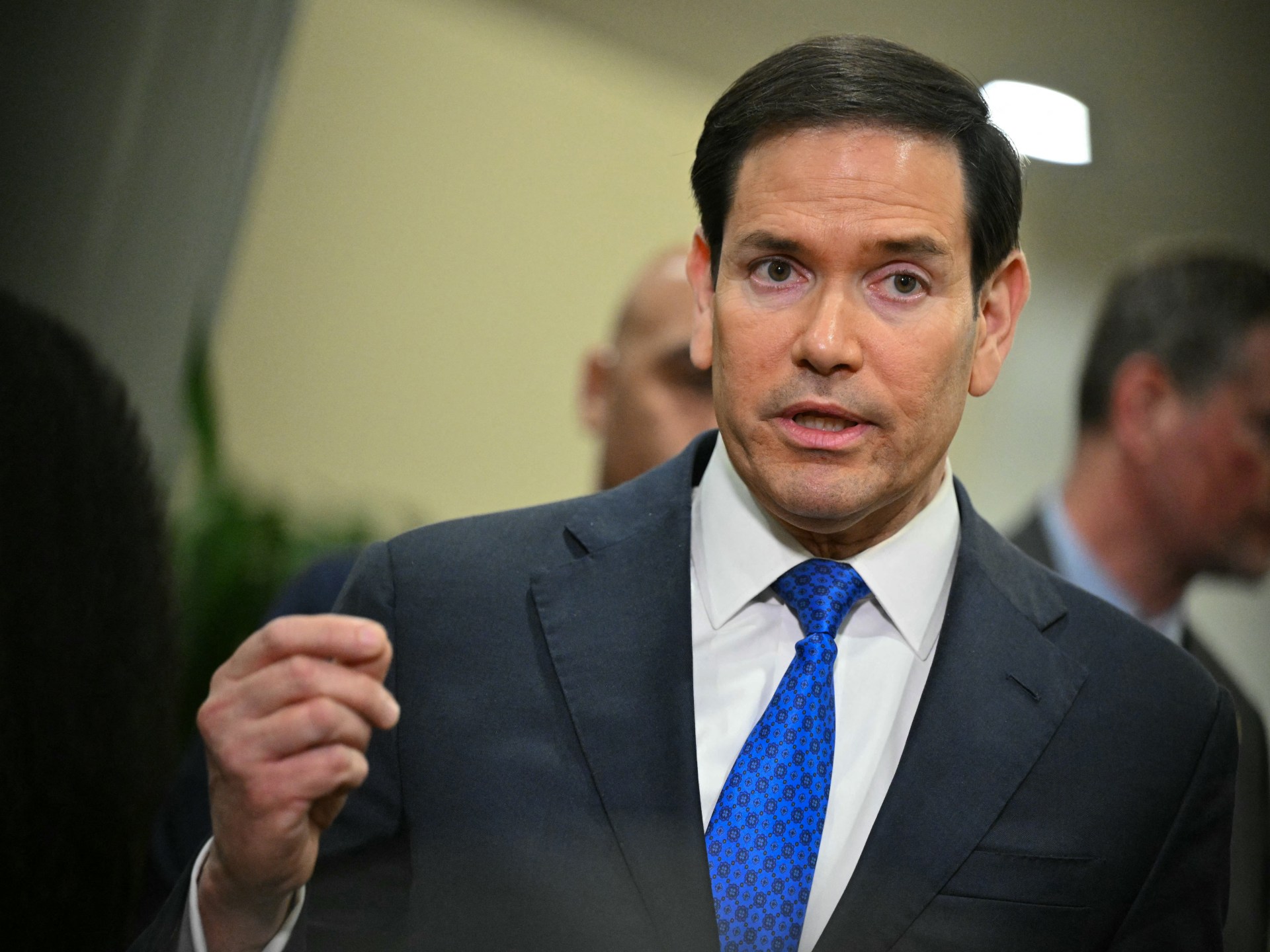
US Iran Strikes: American Protection or Israeli Influence?
The decision to deploy military force is arguably one of the most consequential a nation's leadership can make, carrying immense weight in terms of human lives, geopolitical stability, and global perception. Recent US strikes on Iran ignited a fierce debate, not just about their necessity but about the underlying motivations. At the heart of this discussion lay a critical question: were these actions a direct response to safeguard American personnel and interests, or were they, perhaps, influenced by the strategic objectives of a key regional ally, Israel? The shifting narrative offered by Secretary of State Marco Rubio brought this complex dilemma into sharp focus, forcing observers to consider the intricate dance between national defense and allied commitments, especially concerning Rubio's Israel influence claims.
The Shifting Sands of Justification: Rubio's Evolving Narrative
The public discourse surrounding the US strikes on Iran was significantly complicated by contradictory statements from then-Secretary of State Marco Rubio. Initially, Rubio offered a candid, if startling, assessment that suggested American actions were a pre-emptive measure, taken in anticipation of an Israeli move against Iran. Speaking to reporters, Rubio reportedly admitted that the US was effectively "forced into the war with Iran by Israel." He elaborated, explaining that the government of Israeli Prime Minister Benjamin Netanyahu had "effectively boxed in the Trump administration," removing the decision from solely American hands. "We knew that there was going to be an Israeli action," Rubio stated, "We knew that that would precipitate an attack against American forces, and we knew that if we didn’t pre-emptively go after them before they launched those attacks, we would suffer higher casualties."
This initial revelation sent ripples through the political landscape, implying a level of Rubio's Iran War Claim: Was US Boxed In by Israel?, where a sovereign US decision might have been dictated by an ally's strategic timetable. However, just a day later, Rubio appeared to walk back these claims, presenting a different rationale for the strikes. On Capitol Hill, he vehemently defended the administration's actions as a purely protective measure for American lives. This significant shift in his public statements highlighted the immense pressure and the delicate balance involved in articulating foreign policy, especially when dealing with sensitive geopolitical flashpoints and close alliances. The question of whether this was a genuine clarification or a strategic retraction became central to the discussion.
Protecting American Lives: The Official Stance
Following his initial, controversial remarks, Marco Rubio swiftly pivoted to an unequivocal defense of the US strikes, centering his argument squarely on the protection of American lives and national security interests. Speaking to reporters, Rubio asserted that President Donald Trump made the decision to launch strikes on Iran to prevent imminent attacks on US forces. "If you tell the President of the United States that if we don’t go first we’re going to have more people killed and more people injured, the president is going to go first," Rubio explained. He emphasized Trump's unwavering commitment to the safety and security of American troops and citizens, framing the strikes as a proactive, necessary defense measure. This narrative strongly articulated that the US would not wait to be attacked but would instead act decisively to neutralize threats.
Beyond immediate troop protection, Rubio also linked the strikes to a broader strategic objective: preventing Iran from acquiring nuclear weapons. He argued that Iran was using its missile and drone capabilities to create a shield behind which it could advance its nuclear program unhindered. "There was no way in the world that this terrorist regime was going to get nuclear weapons, not under Donald Trump’s watch," Rubio declared. This official justification painted a picture of a US administration acting purely in its self-interest, determined to counter a grave threat to global security and to uphold its strategic deterrence. It aimed to dispel any notion of external influence, asserting US autonomy in critical defense decisions.
Key takeaways from the official stance:
- Pre-emptive Defense: Strikes were launched to prevent anticipated Iranian attacks on US personnel.
- Protecting Troops: The primary motivation was the safety and security of American men and women in uniform.
- Countering Nuclear Ambitions: A secondary, but critical, objective was to prevent Iran from developing nuclear weapons under the cover of its conventional arsenal.
- Unilateral Decision-Making: The decision was presented as solely that of the US President, driven by American national interests.
The Specter of Israeli Influence: A Deeper Dive
Despite the State Department's official stance, Rubio's initial admission—that the US was "forced into the war with Iran by Israel"—opened a Pandora's Box of questions regarding Rubio's Reversal: Did Israel Influence US Iran Strikes?. This perspective suggests that US foreign policy, particularly in the volatile Middle East, might not always be solely driven by American strategic imperatives but could be significantly shaped by the actions and priorities of its allies. The strong alliance between the US and Israel is well-documented, but Rubio's Monday comments implied a scenario where Israel's independent actions could indirectly commit the US to military engagement, creating a "boxed-in" situation for the American administration.
Such a dynamic raises critical concerns for national sovereignty and strategic autonomy. If an ally's pre-emptive actions against a common adversary are anticipated to provoke retaliation against US assets, the US might feel compelled to act first, not necessarily because it chose that specific timing or course of action, but to mitigate potential higher casualties on its own forces. This scenario suggests a complex interdependence, where the strategic calculations of one nation directly impact the military decisions of another. Prime Minister Netanyahu's statement on Sunday, acknowledging that attacks on Iran were being conducted with "the assistance of the United States," further fueled speculation about the depth of coordination and potential influence. Understanding this potential