Rubio's Evolving Narrative: The US Strikes on Iran and Allegations of Israeli Influence
The intricate web of Middle Eastern geopolitics often throws up complex questions, especially when it comes to the motivations behind significant military actions. A particular instance that sparked considerable debate involved then-Secretary of State Marco Rubio and his evolving statements regarding the U.S. strikes on Iran during the Trump administration. Initially, Rubio’s remarks hinted at an external push, leading many to question: was the U.S. truly boxed in by Israel?
This article delves into Rubio's initial claims, his subsequent clarification, and the broader implications of these shifting narratives on understanding U.S. foreign policy in a volatile region. We'll explore the complexities surrounding the decision-making process and the persistent debate over U.S. Iran strikes: American protection or Israeli influence?
The Initial Suggestion: Was US Policy Influenced by Israeli Action?
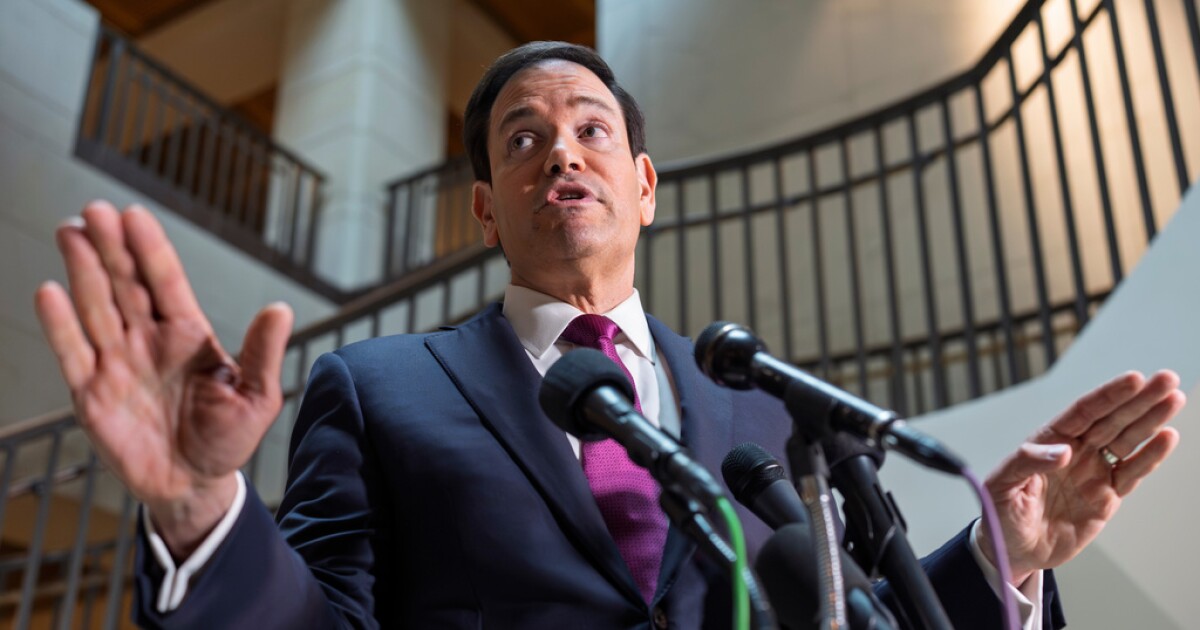
On a Monday, Marco Rubio, then serving as Secretary of State, made statements that sent ripples through political circles and media outlets. Speaking to reporters on Capitol Hill, Rubio seemingly admitted that the U.S. had been compelled into action against Iran due to pressure from Israel. His explanation detailed a scenario where Israel's anticipated actions effectively left the Trump administration with limited choices.
Rubio stated, “We knew that there was going to be an Israeli action. We knew that that would precipitate an attack against American forces, and we knew that if we didn’t pre-emptively go after them before they launched those attacks, we would suffer higher casualties.” This revelation suggested that decisions made in Jerusalem were significantly impacting Washington’s military calculations, potentially putting American forces at risk and shaping U.S. strategic responses. It fueled the narrative that a certain rubio israel influence dynamic was at play, where U.S. policy wasn't entirely autonomous.
The implication was clear: the U.S. was not acting solely on its own intelligence or strategic assessment, but rather reacting to a perceived chain of events initiated by an ally. This perspective raised immediate questions about the extent of Israeli influence over U.S. military engagements and whether the Trump administration was truly unwilling to curb Israeli policies, even when those policies could lead to American involvement in conflicts.
The Walk-Back: Prioritizing American Lives and Preemptive Defense
However, the narrative shifted swiftly. The very next day, Rubio offered a significantly different explanation for the U.S. strikes on Iran. While still on Capitol Hill, he strongly defended President Donald Trump's decision, presenting it as a direct measure to safeguard American lives and prevent potential future attacks on U.S. personnel.
Rubio clarified that President Trump acted because he "determined we were not going to get hit first." He emphasized that the President's paramount concern was the safety and security of American troops and citizens. "If you tell the President of the United States that if we don’t go first we’re going to have more people killed and more people injured, the president is going to go first," Rubio asserted. This repositioning aimed to firmly establish the strikes as a preemptive, defensive action born out of necessity, rather than external pressure.
Furthermore, Rubio broadened the rationale to include Iran's nuclear ambitions, stating, "This threat from Iran, they are hiding behind these missiles and hiding behind these drones... there was no way in the world that this terrorist regime was going to get nuclear weapons, not under Donald Trump’s watch." This expanded justification sought to underscore the inherent dangers posed by Iran and solidify the U.S. action as a response to a direct, multifaceted threat, independent of allied operations. The focus had entirely pivoted from any perceived rubio israel influence to an unambiguous narrative of American self-defense and strategic imperatives.
Understanding Geopolitical Statements: A Tip for Analysis
- Context is Key: Always consider when and where a statement is made. Early comments might be less refined than later, official briefings.
- Audience Matters: Who is the speaker addressing? Different audiences (e.g., reporters versus congressional members) might receive slightly different framings.
- Look for Consistency: While initial statements can evolve, significant shifts warrant careful scrutiny for underlying reasons or pressures.
- Identify Core Messaging: What is the speaker's primary objective? Is it to justify an action, reassure allies, or deter adversaries?
Navigating the Geopolitical Landscape: Beyond Unilateral Decisions
The contrasting statements from Rubio highlight the complex realities of foreign policy decision-making, particularly in a region as volatile and interconnected as the Middle East. It's rare for any nation, even a superpower, to act in complete isolation. Alliances, regional dynamics, and the actions of other state and non-state actors inevitably shape national security strategies.
While Rubio's walk-back emphasized U.S. autonomy and the protection of American interests, the initial remarks served as a reminder of the intricate relationship between the U.S. and Israel. Both nations share significant security concerns regarding Iran, and their strategies are often aligned, if not explicitly coordinated. The idea that Israeli actions could create a strategic imperative for the U.S. is not entirely far-fetched in such a deeply intertwined relationship.
Ultimately, U.S. foreign policy seeks to balance multiple objectives: protecting American personnel, deterring adversaries, supporting allies, and maintaining regional stability. The challenge lies in communicating these complex motivations clearly and consistently, especially when initial claims might contradict later, more official positions. The ongoing debate about rubio israel influence underscores the difficulty in dissecting the true drivers behind high-stakes military decisions.
The Broader Context: Regional Instability and Evacuation Efforts
Amidst the military strikes and political discourse, the human element of the conflict also came into focus. Rubio's department was actively working to assist Americans stranded in the Middle East due to the escalating tensions. This involved a multi-pronged approach, including charter flights, military transport, expanded commercial options, and even land routes to neighboring countries.
These logistical challenges underscore the real-world impact of military actions and the need for comprehensive contingency planning. Even as political leaders debate the rationale for strikes, practical efforts are underway to ensure the safety of citizens abroad, highlighting the wide-ranging responsibilities of a foreign policy apparatus.
Public Opinion and Congressional Scrutiny: A Divided Nation
Beyond the executive branch's internal discussions, the U.S. strikes on Iran also faced considerable scrutiny from both Congress and the American public. The decision drew bipartisan skepticism, with some Republicans expressing concern that it contradicted President Trump's campaign pledge to avoid new U.S. wars. This highlighted a fundamental tension between electoral promises and the realities of geopolitical challenges.
Public opinion was similarly divided, with polling indicating that only about four in ten Americans viewed the strikes as necessary. Support was notably higher among Republicans, reflecting the polarized nature of political discourse in the U.S. This mixed public reaction, coupled with congressional efforts to limit the President's military authority (with both chambers of Congress slated to vote on such measures), underscored the deep internal debate within the U.S. regarding its role in the Middle East and the parameters of presidential power in foreign policy.
Conclusion
Marco Rubio's initial suggestion that the U.S. was "boxed in" by Israeli actions before its strikes on Iran, followed by his swift walk-back emphasizing American self-preservation, illustrates the intricate and often delicate nature of international relations. While the official stance solidified around protecting American lives and deterring Iranian nuclear ambitions, the initial comments sparked a crucial discussion about the dynamics of allied influence in U.S. foreign policy.
The episode serves as a powerful reminder that decisions of war and peace are rarely unilateral, often shaped by a confluence of internal assessments, external pressures, and geopolitical realities. The debate over rubio israel influence continues to resonate, reflecting an ongoing effort to understand the true complexities behind U.S. engagement in the Middle East.