Rubio's Reversal: Navigating the Complexities of US-Israel-Iran Dynamics
The intricate web of Middle East foreign policy often brings with it moments of intense scrutiny, especially when senior U.S. officials offer seemingly conflicting narratives. One such instance emerged concerning U.S. strikes against Iran, when then-Secretary of State Marco Rubio’s statements sparked a debate about the true drivers behind American military action. Initially, Rubio’s remarks suggested a significant **rubio israel influence** on U.S. decision-making, only for him to later pivot, emphasizing American self-defense. This reversal shines a light on the complex interplay between allied interests, national security imperatives, and the public perception of U.S. foreign policy.
The Initial Disclosure: Was America "Boxed In" by Israel?
The controversy began with candid remarks from Marco Rubio, reportedly made to reporters, which ignited speculation about the extent of **rubio israel influence** on Washington's approach to Iran. According to reports from early March 2026 (as per The Intercept's reference), Rubio indicated that the U.S. had been effectively "forced into the war with Iran by Israel." He elaborated, suggesting that the government of Israeli Prime Minister Benjamin Netanyahu had, through its actions, "boxed in the Trump administration," essentially taking the decision out of American hands.
Rubio's initial account was stark: "We knew that there was going to be an Israeli action," he explained. "We knew that that would precipitate an attack against American forces, and we knew that if we didn’t pre-emptively go after them before they launched those attacks, we would suffer higher casualties." This statement painted a picture where U.S. military intervention, though aimed at protecting American troops, was a reactive measure, necessitated by anticipated Israeli operations and their likely repercussions. It highlighted a perceived unwillingness by the Trump administration to curb Israeli actions, even when those actions could directly lead to U.S. military engagement and casualties. For a deeper dive into these initial claims, consider reading
Rubio's Iran War Claim: Was US Boxed In by Israel?
The Reversal: Prioritizing American Lives and Preventing Nuclear Ambitions
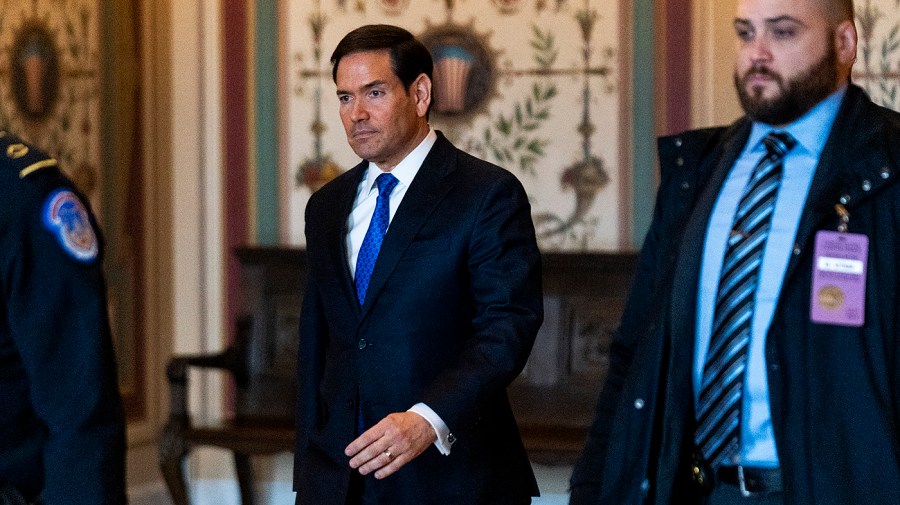
A day after these eyebrow-raising comments, Marco Rubio offered a revised rationale for the U.S. strikes on Iran, presenting a narrative focused squarely on American national security interests. Speaking to reporters on Capitol Hill, he strongly defended President Donald Trump's decision, asserting that the actions were taken to prevent potential attacks on U.S. forces and that Trump had "determined we were not going to get hit first."
"We are not going to put American troops in harm’s way," Rubio stated emphatically. "If you tell the President of the United States that if we don’t go first we’re going to have more people killed and more people injured, the president is going to go first." This revised explanation positioned the U.S. strikes as a purely protective, preemptive measure, driven by the paramount objective of safeguarding American military personnel. It aimed to dismiss any notion of external influence, emphasizing the President's singular commitment to U.S. safety.
Beyond immediate troop protection, Rubio also linked the strikes to Iran's broader strategic goals. He argued that Iran was "hiding behind these missiles and hiding behind these drones," seeking to establish a position where they could pursue their nuclear ambitions unimpeded. "There was no way in the world that this terrorist regime was going to get nuclear weapons, not under Donald Trump’s watch," Rubio declared, adding another layer to the justification: preventing nuclear proliferation. This rationale underscored a belief that the strikes were crucial not just for short-term troop safety but also for long-term regional stability and global security.
Unpacking the Dynamics: U.S. Interests vs. Allied Influence
The contrast between Rubio’s initial admissions and his subsequent defense highlights a perennial challenge in international relations: balancing sovereign national interests with the complexities of alliances. The **rubio israel influence** narrative, even if later walked back, underscores a crucial debate: To what extent do the actions and strategic imperatives of close allies shape, or even dictate, the foreign policy decisions of the United States?
* **The Nature of Alliances:** Alliances are built on shared interests and mutual support, but they rarely imply perfect alignment. The U.S.-Israel relationship is often described as exceptionally strong, characterized by significant intelligence sharing and strategic coordination. However, instances where an ally's actions could lead to U.S. entanglement force Washington to walk a tightrope between solidarity and self-preservation.
* **Perception vs. Reality:** Public statements by high-ranking officials carry immense weight. Rubio’s initial comments, regardless of his later clarification, injected the perception of external influence into a sensitive military action. This can erode public confidence in the autonomy of U.S. foreign policy and fuel skepticism about the stated reasons for military engagements.
* **The Preemptive Strike Doctrine:** The U.S. rationale of "not going to get hit first" is a cornerstone of preemptive defense. However, when combined with claims of being "boxed in" by an ally's actions, it complicates the public understanding of what constitutes a truly independent and necessary preemptive strike.
Understanding these dynamics is critical for citizens and policymakers alike. It prompts questions about accountability, transparency, and the criteria by which the U.S. commits its forces abroad. The debate over whether U.S. actions were primarily for "American Protection or Israeli Influence" remains central. For more on this, check out
US Iran Strikes: American Protection or Israeli Influence?
Navigating Skepticism and Public Opinion
The U.S. strikes against Iran, and the shifting explanations for them, were met with considerable skepticism both within Congress and among the American public. This bipartisan skepticism was not entirely new; Trump’s past campaign pledges to avoid "new U.S. wars" often clashed with his administration's more assertive foreign policy stances.
Congressional lawmakers, including some Republicans, expressed concerns that the strikes might escalate tensions unnecessarily or draw the U.S. into a broader conflict without clear strategic objectives. The conflicting narratives surrounding the strikes only fueled these doubts, making it harder for the administration to build a strong, unified front for its actions.
Public opinion further reflected this uncertainty. Polling indicated that only about four in ten Americans—predominantly Republicans—viewed the strikes as necessary. This mixed reception underscores the importance of clear, consistent communication from government officials, especially when committing troops to potentially dangerous situations. When statements appear to contradict each other, as in Rubio's case, it can deepen public cynicism and make it harder to garner support for complex foreign policy decisions.
Practical Implications and the Road Ahead
Beyond the political and strategic debates, the immediate aftermath of such conflicts often brings practical challenges. The State Department, under Rubio’s purview, was actively involved in arranging charter planes, military flights, and land routes to assist Americans stranded in the Middle East due to the conflict. This logistical effort highlights the real-world impact of military actions, necessitating robust consular services and emergency evacuation plans.
Meanwhile, on Capitol Hill, both chambers of Congress were set to vote on measures that could potentially limit U.S. military involvement in Iran. These legislative efforts reflect a broader desire by some lawmakers to reassert congressional authority over declarations of war and military engagements, especially in situations where the rationale for intervention seems to evolve or is disputed.
Conclusion
Marco Rubio's differing statements regarding the U.S. strikes on Iran encapsulate a profound and ongoing debate about the drivers of American foreign policy. While his later remarks emphasized the clear necessity of protecting American lives and preventing nuclear proliferation under the President’s watch, his earlier comments offered a glimpse into the complex dynamics where the actions of a key ally like Israel could potentially influence U.S. strategic calculations. This episode serves as a powerful reminder of the delicate balance leaders must strike between alliance commitments, national security imperatives, and transparent communication with both domestic and international audiences, especially when questions of **rubio israel influence** inevitably arise. The true motivations behind such weighty decisions often remain subject to interpretation, leaving lingering questions about accountability and the autonomy of U.S. military action on the global stage.